ServicesSiding
Siding Repair and Replacement in Covington
We repair and replace vinyl and fiber cement siding, and we check the sheathing and house wrap behind it before anything new goes up. You get a written scope, a start date we expect to keep and an arrival window for each work day.
What Siding Work Actually Fixes
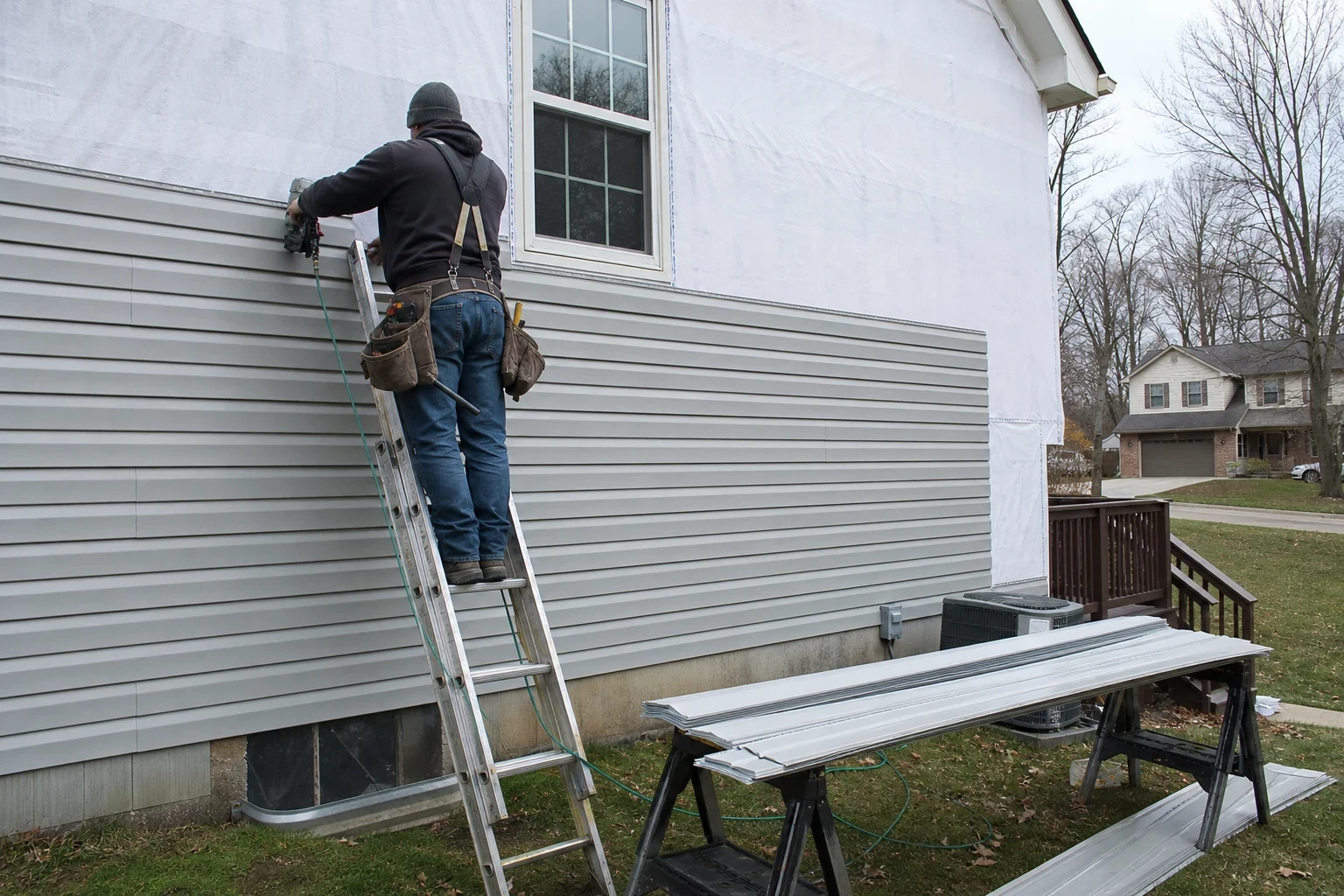
Siding is the outer layer of a wall system. Behind it sit the house wrap or felt, the window and door flashing, and the wood sheathing nailed to the studs. When a panel cracks or a seam opens, the real risk is water reaching that sheathing and staying there.
Some walls only need a few panels swapped and a trim joint resealed. Others have soft sheathing, failed flashing over a window or siding that has warped from being nailed too tight years ago. We open the wall where the damage shows, tell you which case you have and price the job that matches it.
Covington winters swing above and below freezing, so trapped moisture freezes, expands and pries joints wider each season. Fixing the cause now keeps a small panel repair from turning into a section of rotted wall.
What Our Siding Work Includes
- Panel and section repair
- We replace cracked, holed or loose vinyl panels and damaged fiber cement boards, unlocking the courses above so the new piece seats into the existing lap. Older vinyl fades unevenly, so we bring sample pieces to the estimate and say plainly whether a close match is possible before you commit to anything.
- Full siding replacement
- We strip the old siding, inspect the sheathing, replace soft boards and install new house wrap with taped seams before the new siding goes on.
- Flashing at windows and doors
- Most wall leaks start at a window head or door jamb. We install head flashing and lap the wrap shingle-style so water drains out over the siding instead of behind it.
- Correct fastening
- Vinyl expands and contracts with temperature, so we nail in the center of the slots and leave a small gap under each nail head. Fiber cement gets fastened to its own spacing and edge-distance rules.
- Trim, soffit and J-channel
- We replace corner posts, J-channel and soffit panels where needed so every cut edge is covered and drains properly.
- Cleanup each day
- We pick up cut-offs, old nails and wrap scraps at the end of every work day, then run a magnet over the lawn and beds.
Signs Your Siding Needs Attention
Warped or rippled panels
Wavy vinyl usually means it was nailed too tight and cannot move with temperature. It often pulls loose at the seams next.
Soft spots when you press the wall
If a section flexes under your hand, the sheathing behind it may be wet or rotted. That needs to be opened and checked.
Stains or peeling paint inside
Water marks under a window or bubbling paint on an exterior wall often trace back to missing flashing or a failed seam outside.
Cracks, holes or missing pieces
Hail, a mower-thrown rock or a strong wind can crack vinyl and chip fiber cement. Each opening lets rain reach the wrap.
Mildew along the bottom courses
Green growth near the ground or under a gutter overflow points to a wall staying wet. Sometimes the fix starts with the gutters, not the siding.
What Moves the Price of Siding
Siding cost depends on how much wall you are covering and what we find once the old siding is off. We price from a measured scope, not a guess. If hidden sheathing damage turns up, we show you photos and talk through it before doing extra work.
Wall area and stories
More square footage means more material and labor. Second-story walls need ladders or staging, which adds setup time.
Material choice
Vinyl is lighter and faster to hang. Fiber cement is heavier, needs special cutting and more careful fastening, and costs more to install.
Condition of the sheathing
Rotted or delaminated boards have to be replaced before new siding goes on. This is the item most likely to change once the wall is open.
Windows, doors and trim detail
Every opening needs flashing and trim, and homes with many windows or decorative corners take more cutting and fitting.
How a Siding Job Runs
- 1
Free estimate at your home
We look at the siding, press-test soft areas and check flashing at windows and doors. You get a written scope that lists materials, square footage and any sheathing allowance.
- 2
A start date and arrival window
We give you a realistic start date and a morning arrival window for each day. If weather or a material delay moves the date, we call you as soon as we know, not the morning of.
- 3
Tear-off and wall check
We remove siding one wall at a time so your home is never left open overnight. Damaged sheathing is photographed and shown to you before we replace it.
- 4
Wrap, flashing and new siding
New house wrap and flashing go on first, then the siding, trim and channel. We finish each wall before starting the next.
- 5
Walk-through
We walk the job with you, point out what we replaced behind the siding and leave the yard clean. We also note any walls that still have older siding, so you know which areas to keep an eye on.
Siding Questions We Hear
Can you replace just a few damaged panels?
Yes, in most cases. We unlock the course above, remove the damaged piece and slide in a new one. Matching an older faded color can be hard, so we sometimes suggest pulling a matching panel from a less visible wall and putting the new one there.
How long does a full siding replacement take?
An average house usually takes several work days, depending on size, stories and sheathing repairs. We give you the expected number of days with the estimate, and if rain or a delivery pushes things back, we call to reset the schedule.
Do I need to be home while you work?
You do not need to be home for the work itself. We do ask that someone be available by phone in case we find damaged sheathing, so we can send photos and get your go-ahead before replacing it.
Should I pick vinyl or fiber cement?
Vinyl handles moisture well, needs little upkeep and costs less to install. Fiber cement resists impact and fire better and holds paint, but it is heavier and takes longer to hang. We walk through both on your walls during the estimate.
What stands behind your siding work?
We are a licensed and insured company, so the crew on your walls is working under proper coverage. Our siding installations also carry a 10-year labor warranty on the workmanship. If something we installed gives you trouble, call us and we will come out and look at it.
Get Your Siding Looked At
We will check the panels, the flashing and the wall behind them, then give you a written scope and a start date you can plan around. We also handle gutters and roof repair if the problem starts above the wall.