ServicesRoof Inspections
Roof Inspections in Covington, Booked Into a Window You Can Count On
We get on your roof, check the attic and photograph what we find, from cracked pipe boots to lifted step flashing. You get a free inspection, an arrival window when you book, and a plain answer on what needs work now and what can wait.
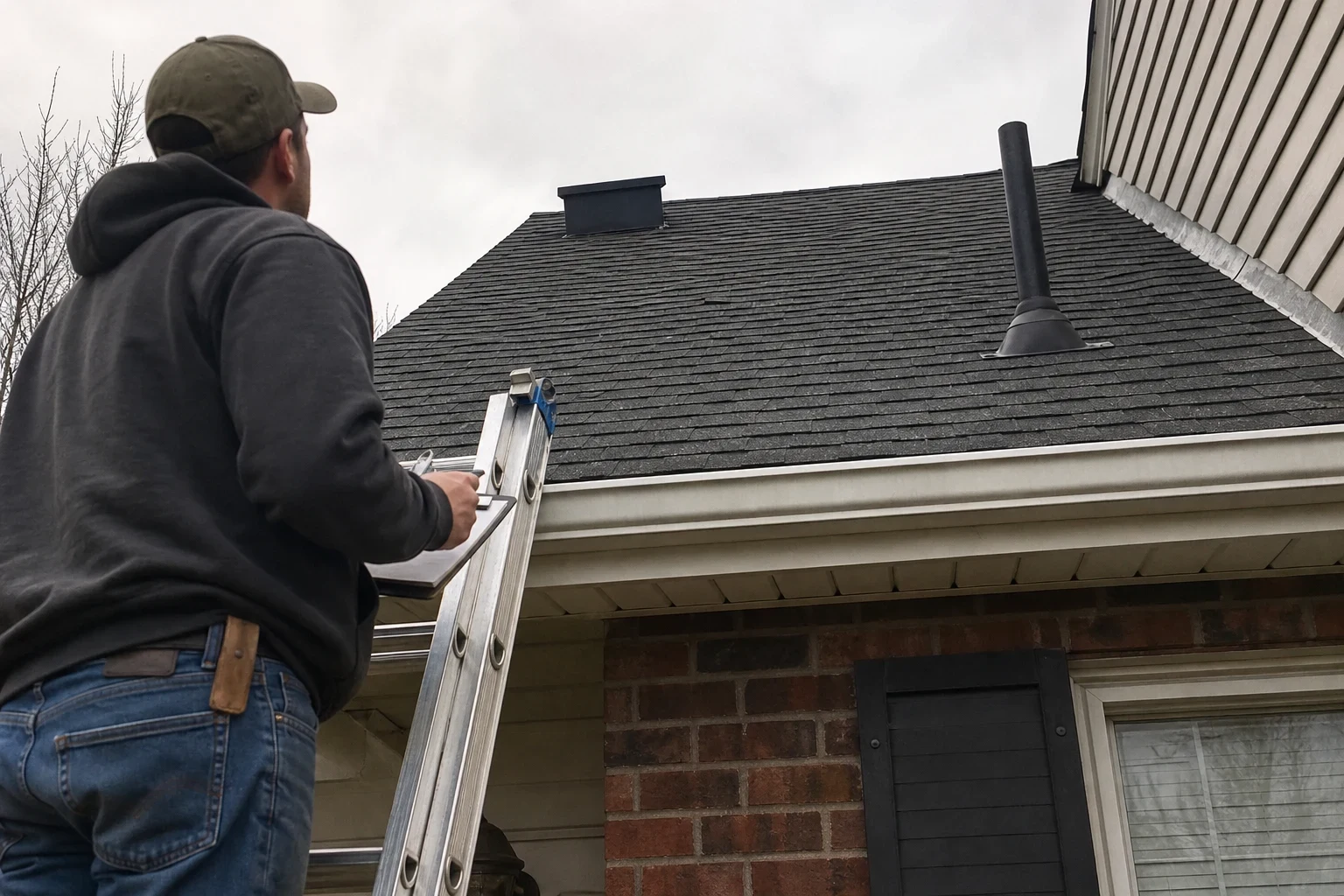
Why an Inspection Comes Before Any Repair Decision
During an inspection we examine each layer that sheds water away from your home. That means the shingles, the flashing at chimneys and sidewalls, the pipe boots and vents, the gutters and drip edge, and, from the attic side, the underside of the decking. Water rarely enters where the ceiling stain shows up, so we trace each layer instead of guessing from the surface.
It is the right call when your roof is past 15 years, when you are buying or selling, after a winter of hard freeze-thaw cycles, or before you decide between roof repair and roof replacement. A small fix found early, like resealing a counterflashing joint, costs far less than the rotted sheathing it would cause in two seasons.
When you book, we give you a date and an arrival window. If an earlier job runs long or rain moves in, we call you before the window opens, not after it has passed.
What We Check on Every Inspection
Shingle surface and seal strips
We look for granule loss, curling, cracked tabs and shingles whose adhesive strips have let go. Bare asphalt ages fast under summer UV, and unsealed tabs are the first to lift in wind.
Flashing and chimneys
Step flashing, counterflashing and chimney crickets get a close look, along with the mortar joints where counterflashing is set into brick. Loose or backed-out flashing is one of the most common leak sources we find.
Pipe boots and vents
Neoprene collars around plumbing vents crack after years of sun and let water run straight down the pipe. We also check box vents, ridge vent and exhaust caps for damage and missing fasteners.
Attic, decking and ventilation
Inside the attic, we check the sheathing for water marks, light showing through at the seams, wet insulation and nail tips gone rusty from condensation. We also compare soffit intake with ridge or box exhaust, because poor airflow cooks shingles in summer and feeds ice dams in winter.
Gutters, drip edge and fascia
When a gutter fills with leaves or pulls away from its hangers, runoff spills behind the drip edge and soaks the fascia board and the lower edge of the decking. We check pitch, hangers and outlets along every run. If the gutters themselves are the problem, we note it and point you to our gutters service.
Photos and written findings
Every issue gets a photo and a short note on cause and urgency. You keep the record whether or not you hire us.
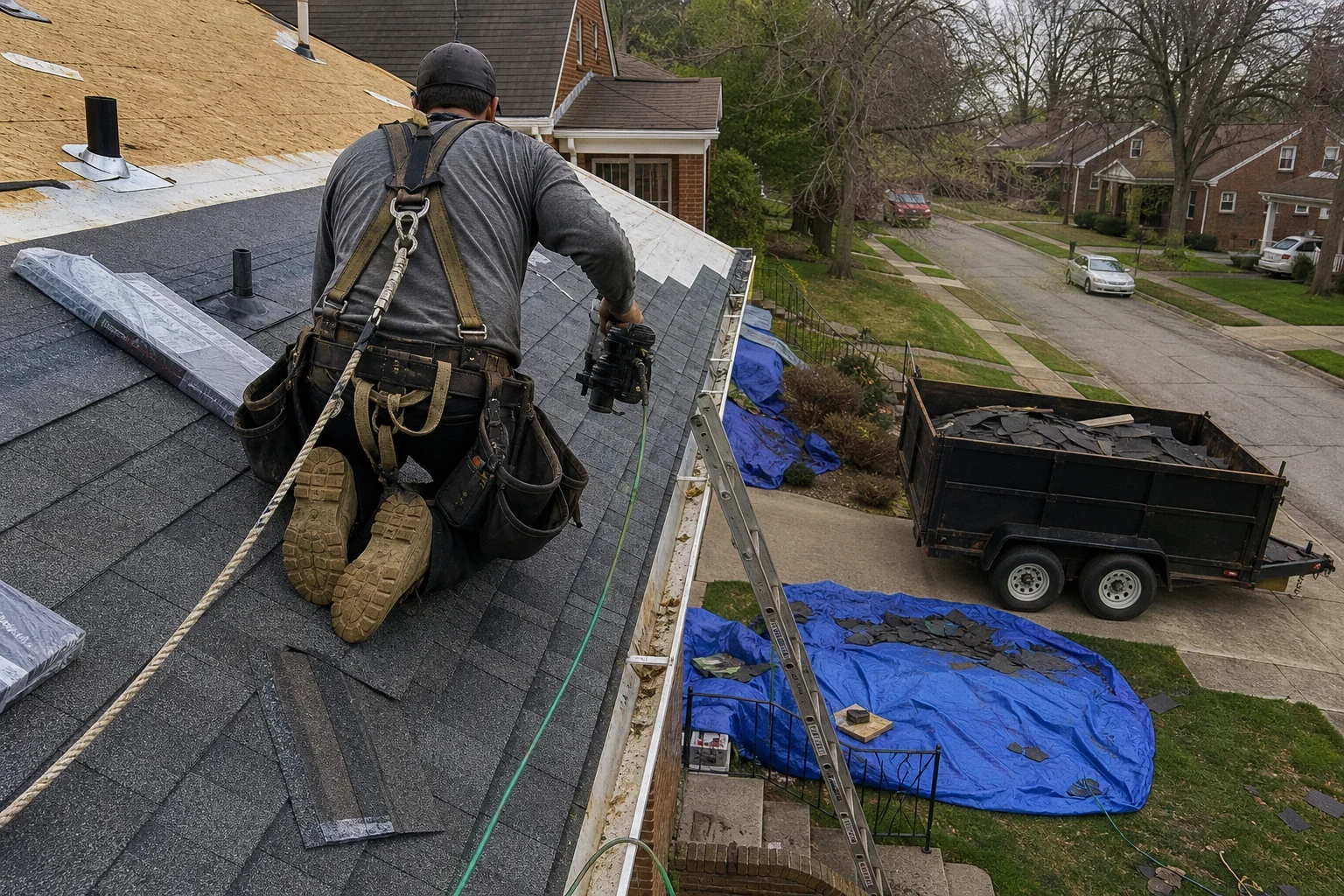
Signs Your Roof Is Due for an Inspection
- Your roof is 15 years or older
- Most asphalt roofs start showing wear at sealants and boots around this age, even when the shingles still look fine from the yard.
- A stain on the ceiling or near the chimney
- Brown rings, peeling paint or a damp smell upstairs mean water is getting past something. The source is often several feet uphill of the stain.
- Icicles and ice dams along the eaves
- Heavy ice at the edge usually means warm attic air is melting snow higher up, and the meltwater refreezes at the colder overhang. That points to insulation or ventilation trouble worth checking.
- Granules collecting in the gutters
- A handful after a new roof is normal. Steady piles years later mean the shingles are losing their protective layer.
- High winds just came through
- Creased or missing shingles are not always visible from the ground. If damage is confirmed, our storm damage repair page explains the next steps.
How Your Inspection Day Runs
- 1
A short booking call
We ask the roof's age, what you have noticed and where the attic access is. Then we set a date and an arrival window that works for you.
- 2
An update if anything shifts
If the roof is wet, icy or the wind is up, we will not walk it. We call as soon as we know and offer the next open slot instead of leaving you waiting.
- 3
Exterior and roof surface
Our crew starts with a walk around the house, then goes up to check shingles, flashing, boots, vents and valleys. Most inspections take an hour to ninety minutes, longer on steep or cut-up roofs.
- 4
Attic check
Once you give the okay, we head up through the attic hatch with a flashlight and a pin-type moisture reader. Readings on the decking tell us whether a stain is old and dry or still taking on water, and we check nails, insulation depth and airflow while we are up there.
- 5
Findings in plain terms
We sit down with you, go through the photos and sort each item into fix now, watch, or plan for later. If repair will hold, we say so.
What Shapes the Cost of Work After the Inspection
The inspection itself is free, with no obligation to book anything. If we do find work, the price depends on the specific problem and what is under it. We explain each line before you decide.
- Scope of what we find
- Resealing one pipe boot is a short job. Rebuilding chimney flashing or replacing a run of shingles takes more labor and material.
- Pitch, height and access
- Steep or tall roofs need more safety setup and slow the work down. Tight lots or overhanging trees can add time too.
- Decking condition
- Soft or delaminated sheathing has to be cut out and replaced before new material goes on. We often cannot confirm this until the old layer is open, so we tell you up front how we would handle it.
- Materials to match
- Matching an older architectural shingle, slate or metal panel can change both cost and lead time.
Common Questions About Our Inspections
- Do you charge anything for the inspection?
- No. The visit, the photos and the walkthrough of what we found cost you nothing. Afterward you decide whether any work makes sense, and we leave that choice with you.
- Do I need to be home?
- We can check the exterior without you, but we need someone home for the attic. We also prefer to go through the photos with you in person, so most people pick a window when they can be there.
- What happens if the weather turns on inspection day?
- We do not walk wet, icy or windy roofs, because that is unsafe and hides problems like lifted tabs. We call you as early as we can and set a new time.
- Will you just tell me I need a new roof?
- No. Many roofs need a few targeted fixes, and we will say that. If the decking is failing or the shingles are worn out across every slope, we explain why roof replacement is the better spend and show you the photos that support it.
- Is the repair work you recommend covered?
- Repairs or replacements we do after an inspection carry our 10-year labor warranty. We are licensed and insured, and we can go over exactly what the warranty covers when you call.
- Can the inspection help with an insurance claim?
- Our dated photos and notes give you a clear record of the condition of your roof. We can explain how claims usually proceed, but the adjuster makes the coverage decision, not us.
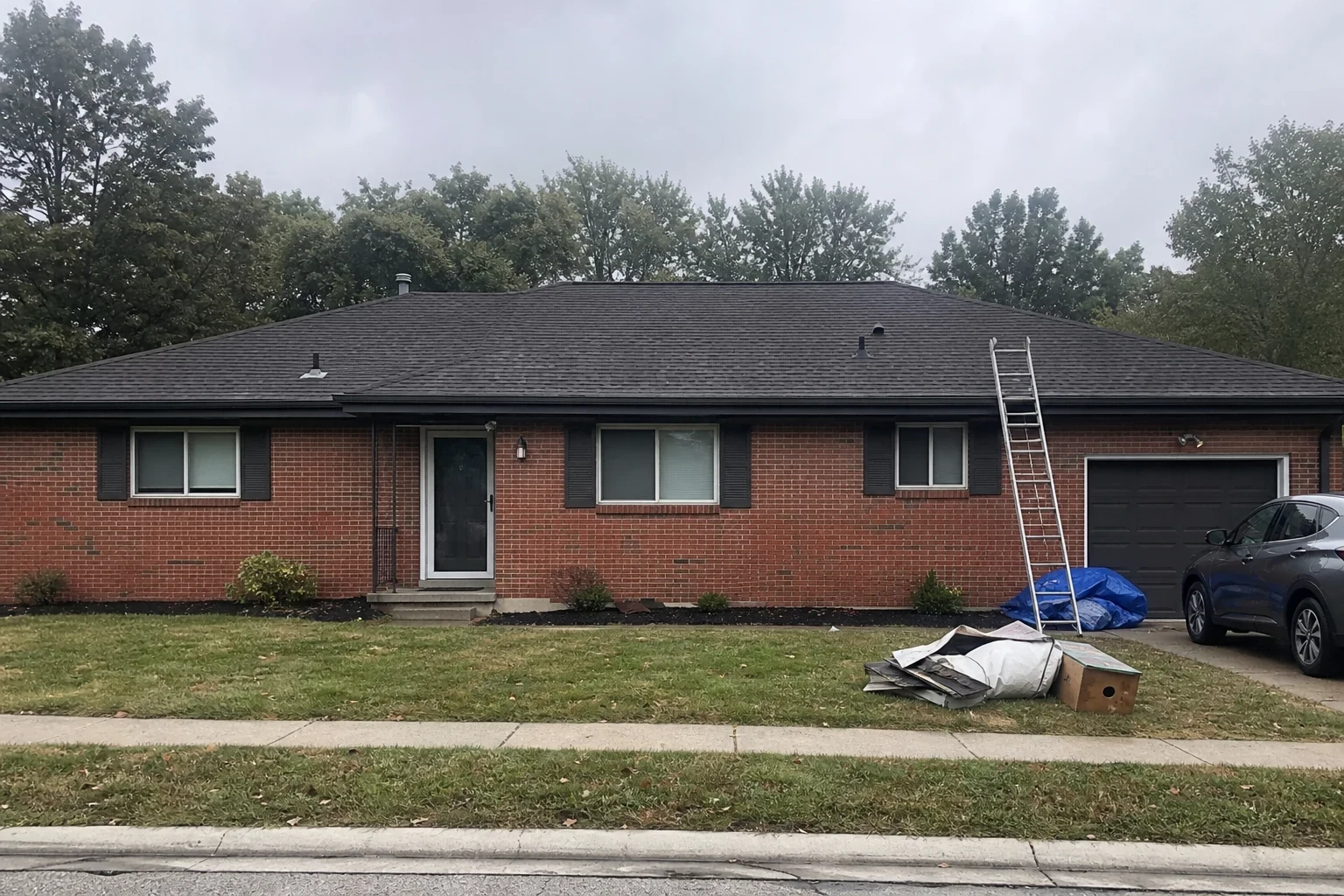
Put a Roof Inspection on Your Calendar
We inspect roofs across Covington, Fort Mitchell, Erlanger and nearby towns. Tell us what you have noticed, and we will book a date, name the time we expect to pull up, and phone you ahead if the plan has to move.